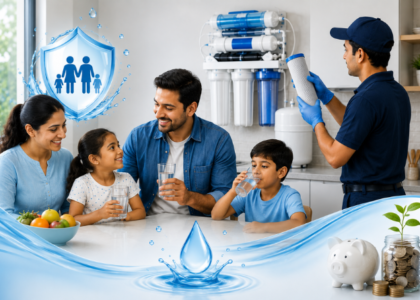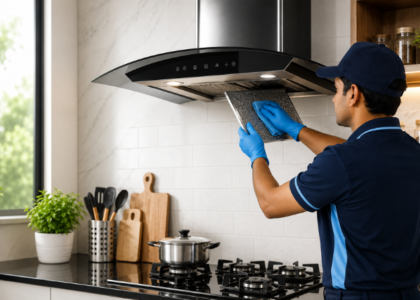
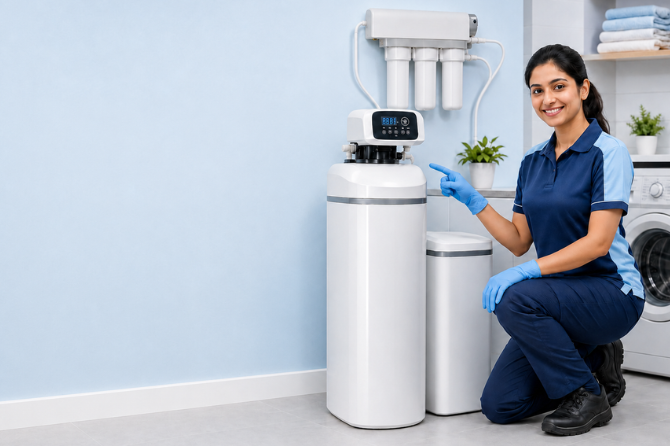
Clean and safe water is essential for drinking, cooking, bathing, washing clothes and protecting household appliances. Water purifiers and water softeners improve water quality, but both systems require regular care to work efficiently.
1. Importance of Clean Water
- Clean water supports a healthier lifestyle.
- It improves the taste and smell of drinking water.
- It helps protect family members from harmful contaminants.
- Better water quality also supports cooking, cleaning and personal hygiene.
- Soft water helps reduce damage to plumbing fixtures and appliances.
2. Role of a Water Purifier
A water purifier removes unwanted substances from drinking water, including:
- Dust and sediment
- Chlorine
- Bad taste and odour
- Dissolved impurities
- Suspended particles
- Certain harmful microorganisms
Modern purifiers may use RO, UV, UF, activated carbon or a combination of purification technologies.
3. Why Filter Replacement Is Necessary
- Filters collect dirt and contaminants over time.
- Clogged filters reduce the purifier’s water flow.
- Old filters can affect the taste and smell of water.
- A blocked filter makes the purifier work harder.
- Timely replacement protects the membrane and other internal components.
- Filter life depends on water quality, daily usage and purifier type.
4. Signs Your Water Purifier Needs Service
Arrange professional servicing when you notice:
- Slow water output
- Unusual taste or smell
- Cloudy drinking water
- Water leakage
- Strange operating sounds
- Sudden changes in TDS level
- Frequent purifier shutdowns
- Storage tank filling slowly
Early servicing can prevent major breakdowns and expensive repairs.
5. Understanding Hard Water
Hard water contains high levels of minerals such as calcium and magnesium. Common signs include:
- White scale around taps and showers
- Stains on bathroom tiles
- Dry skin
- Rough or dull hair
- Poor soap and shampoo lather
- Stiff clothes after washing
- Scale inside geysers and washing machines
- Reduced appliance efficiency
6. Benefits of a Water Softener
A water softener helps by:
- Reducing hardness minerals
- Preventing scale formation
- Protecting taps and plumbing
- Improving soap performance
- Helping clothes feel softer
- Supporting smoother skin and hair
- Protecting geysers and washing machines
- Reducing cleaning effort
7. Water Softener Maintenance
Routine water softener care may include:
- Checking the salt level
- Cleaning the brine tank
- Inspecting the resin bed
- Testing the regeneration cycle
- Checking the control valve
- Removing salt bridges
- Testing water hardness
- Inspecting pipes and connections
Regular servicing helps the softener continue supplying properly treated water.
8. Importance of Professional Installation
Professional installation ensures:
- Correct inlet and outlet connections
- Proper drainage
- Safe electrical setup
- Suitable water pressure
- Leak-free operation
- Better system performance
- Longer equipment life
Incorrect installation can cause leakage, low pressure, drainage issues and frequent breakdowns.
9. Benefits of Regular Maintenance
Regular maintenance helps:
- Improve water quality
- Maintain proper water flow
- Prevent sudden breakdowns
- Reduce repair costs
- Extend equipment life
- Protect internal components
- Improve energy efficiency
- Protect household appliances
10. Final Advice
- Do not wait until the system completely stops working.
- Schedule periodic inspections even when there is no visible problem.
- Replace filters according to water quality and usage.
- Use trained technicians for installation and repair.
- Keep the purifier and softener area clean and dry.
- Check regularly for leakage, unusual noise or reduced performance.
With professional installation, timely filter replacement and routine servicing, water purifiers and softeners can provide reliable performance for years. Proper care ensures cleaner drinking water, softer household water and better protection for your family and home appliances.